

Bridging the Gap in Pelvic Health: Spotlight on Dr. Sarah Kittler, PT, DPT
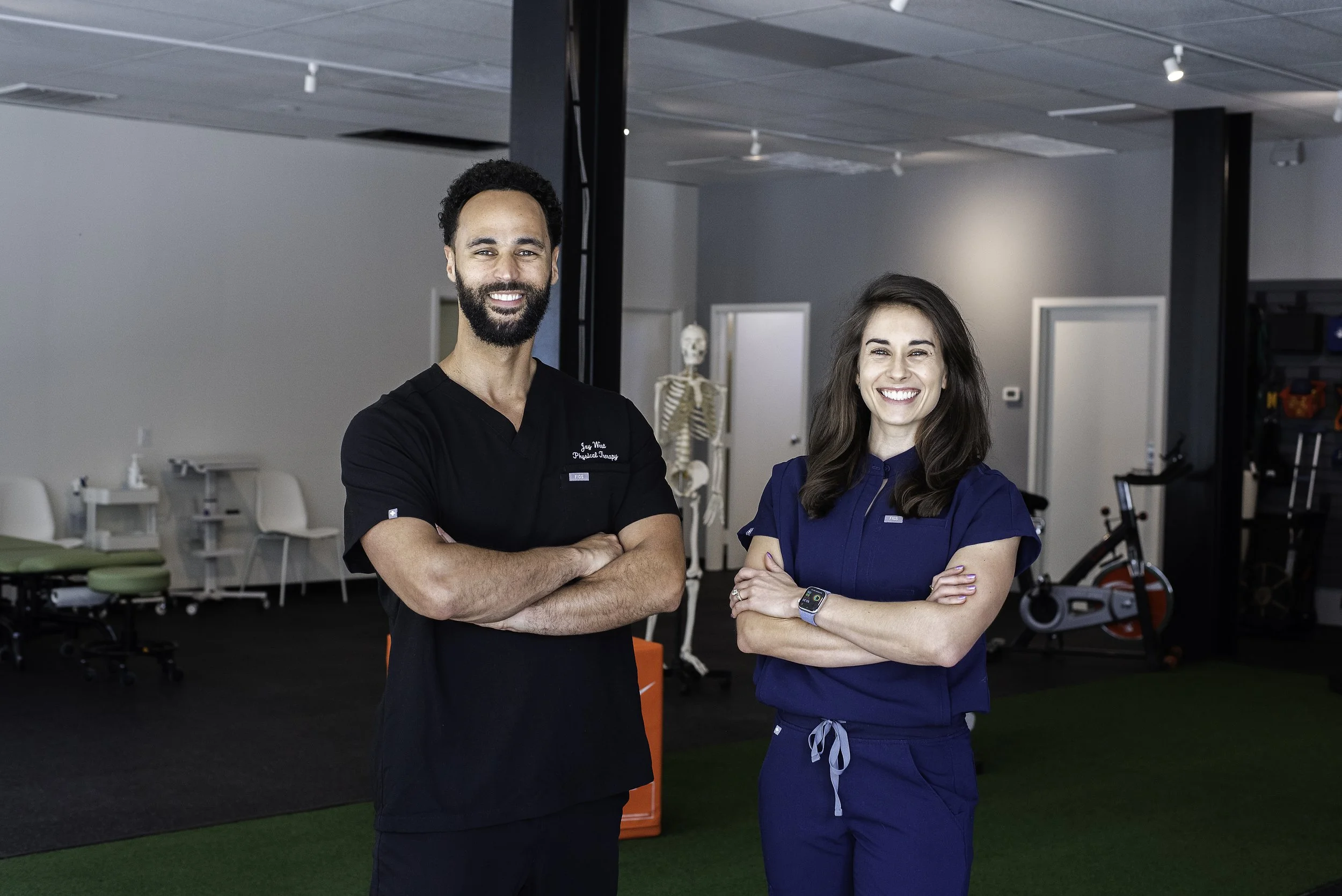
At Jay West PT, we believe that rehab should never stop at basic daily movements—it should bridge the gap back to the sports, lifts, and active lifestyles you love. Over the past four months, we’ve had the privilege of offering specialized Pelvic Health Physical Therapy in our office through Dr. Sarah Kittler, DPT.
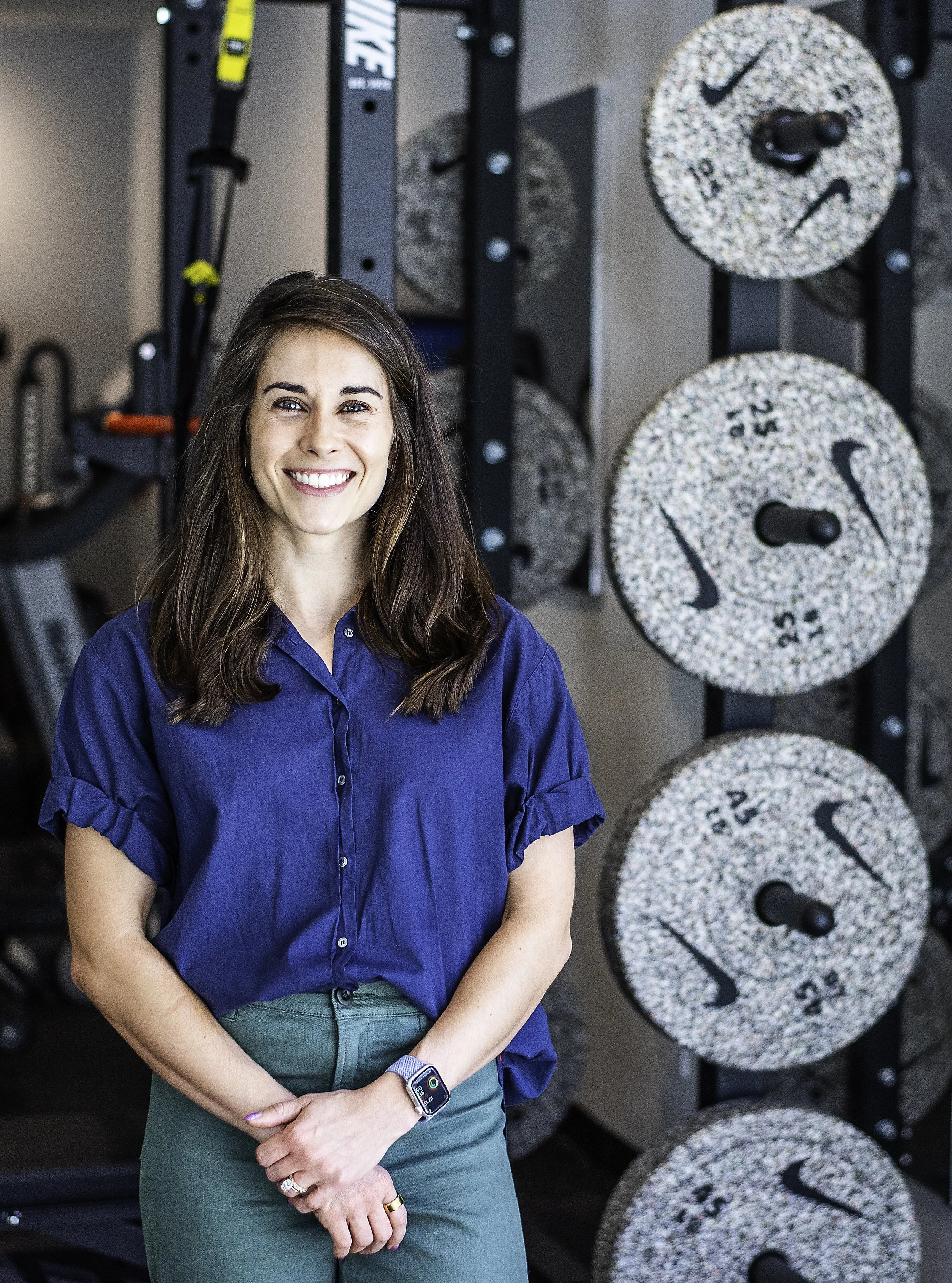
We sat down with Dr. Sarah to discuss her journey into pelvic health, her evidence-based treatment philosophy, and how she helps active individuals navigate everything from pregnancy and postpartum return-to-sport to high-intensity training.
The Turning Point: Bridging the "Post-Op Gap"
Jay: Sarah, you’ve been a physical therapist for six years. What inspired you to seek out a specialized pelvic health certification to supplement your sports and orthopedic training?
Dr. Sarah: "It actually came from a personal experience. I had an abdominal surgery and felt really at a loss for what to do from a rehab perspective. My doctor gave me the standard restriction: 'Don't lift more than 10 pounds for two weeks, and then you can go back to running.'
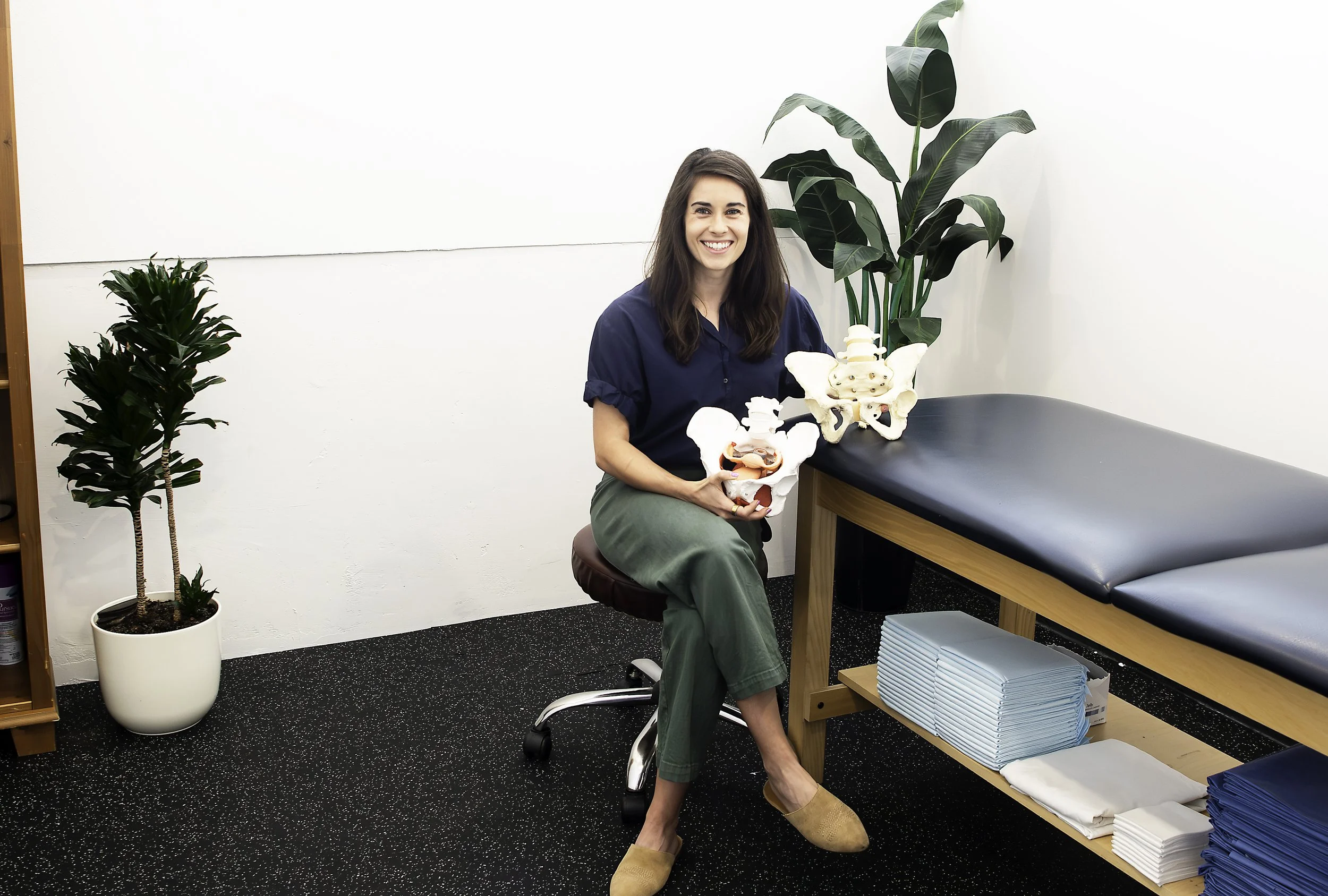
I felt like there was a massive gap between strict activity restriction and suddenly returning to high-impact sport. Even as an experienced orthopedic PT, I realized I had a personal knowledge gap when it came to pelvic floor function and core control. I saw a pelvic floor therapist for a couple of months and learned so much. It reduced my fear around returning to exercise safely. Looking ahead to my own future journey with pregnancy and postpartum, I wanted to gain the knowledge to navigate that myself—and then use that expertise to guide others through theirs."
The Clinical Perspective: Standard post-operative or postpartum medical clearances often jump from strict rest (e.g., 6–8 weeks light activity) straight to "unrestricted activity." Pelvic health physical therapy acts as the progressive loading phase, ensuring the deep core, pelvic floor, and breath mechanics are synchronized before returning to heavy lifts or high-impact running.
From Powerlifting to Postpartum: The High Prevalence of Dysfunction in Active Females
Jay: You’re an active athlete yourself. Is that the primary population you see in your pelvic health practice?
Dr. Sarah: "My core focus is the active female—whether pre-pregnancy, pregnant, postpartum, or moving into menopause and beyond. Over the last three months, I’ve treated women across a huge spectrum: powerlifters, endurance runners, competitive jiujitsu athletes, general gym-goers, and moms who just want to keep up with their daily lives with confidence."
Jay: That’s a wide variety of demands on the body! How does pelvic health connect all those different activities?
Dr. Sarah: "The sport might change, but the foundational principle is identical: managing intra-abdominal pressure (IAP) and preparing the pelvic floor to handle load. Whether you're bracing for a 200-pound deadlift, managing impact forces while running, or lifting a toddler out of a crib, your pelvic floor has to dynamically contract and relax in coordination with your diaphragm and deep core."
The Evidence on Athletic Populations:
High Prevalence: Clinical studies show that 45% to 53% of active female athletes report experiencing symptoms of pelvic floor dysfunction, including urinary leakage, pelvic pain, or urgency (Póvoa et al. 118; Bø 451). In high-impact sports like running, gymnastics, or heavy resistance training, the risk of urinary incontinence is nearly 3 times higher than in non-athletic populations (De Mattos et al. 1989).
Heavy Resistance Training & Intra-Abdominal Pressure (IAP): Heavy squats, deadlifts, and overhead presses create sudden spikes in intra-abdominal pressure (Hackett and Chow 2338). If the pelvic floor muscles are either too weak OR hypertonic (too tight and unable to lengthen), they cannot effectively balance this downward pressure, leading to compensatory strain, leaking, or pelvic pressure under load.
The Silent Burden: Research reveals that up to 78% to 84% of symptomatic female athletes never disclose their pelvic floor issues or seek specialized care, often believing it's just an unavoidable side effect of training hard.
Inside a Session: Education, Movement, and Functional Testing
Jay: What can someone expect when they walk into a pelvic health evaluation with you? What is your overall treatment philosophy?
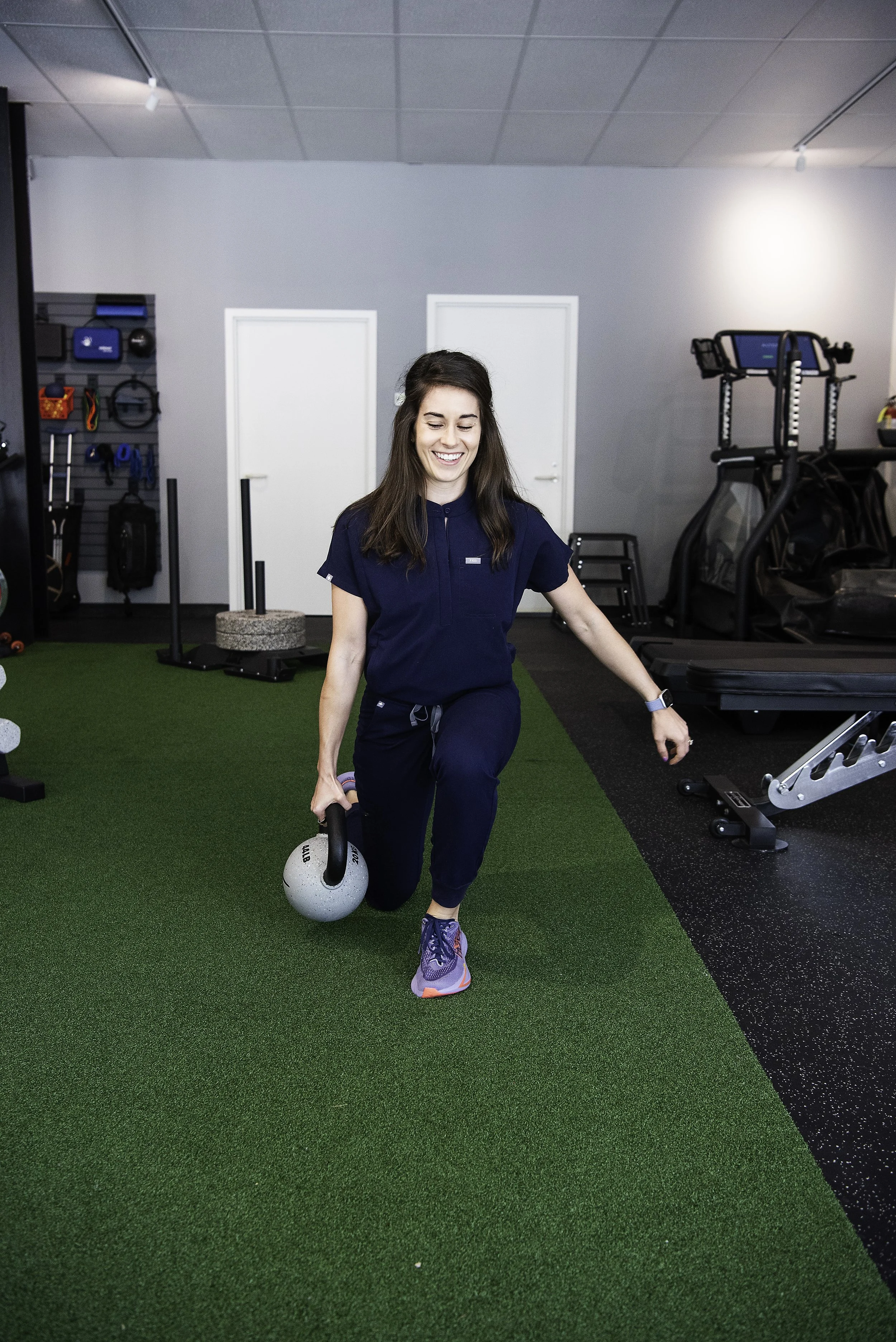
Dr. Sarah: "It always starts with education. Our first goal is helping you understand where the pelvic floor is, what its job is, and how it moves. From there, we assess full-body mobility and strength—checking the spine, hips, and legs to see how external biomechanics might be impacting the pelvis.
When appropriate and agreed upon, we also perform an internal pelvic exam. It gives us invaluable data: Is the pelvic floor contracting and relaxing through its full range? Is there muscle tension? When you cough, laugh, or brace, can the pelvic floor resist that pressure?"
Jay: Is that internal assessment done strictly lying down on a treatment table?
Dr. Sarah: "No—and that’s a crucial distinction in how we practice. I perform internal evaluations both lying down and standing up. Your pelvic floor isn't usually challenged when you're lying in bed; it's challenged when you're standing up, picking up your kid, or under a barbell. We need to see how those muscles respond both unloaded and under load."
The Clinical Perspective: Muscle tone, resting organ position, and gravitational stress change drastically when moving from supine (lying down) to an upright, loaded stance (Texer et al. 12). Evaluating pelvic floor activation standing or during loaded movement patterns (like squats or deadlifts) provides a true picture of real-world athletic function.
High-Standard Training: The ICE Certification
Jay: Where did you complete your specialized certification, and what did that process involve?
Dr. Sarah: "I earned my certification through the Institute of Clinical Excellence (ICE), a continuing education organization known for its rigorous, evidence-based approach to fitness-forward physical therapy.
The training spanned several months of intensive online coursework covering complex diagnoses, post-op guidelines, exercise guidelines during pregnancy, birth preparation and more. It culminated in an intensive two-day live practical where we were tested on everything: performing internal and external exam, executing and queuing lifting mechanics, progressing plyometrics and more."
Common vs. Normal: A Message for Anyone on the Fence
Jay: To wrap things up, what advice would you give to someone who might be experiencing symptoms or curiosity about their pelvic health, but isn't sure if they need physical therapy?
Dr. Sarah: "I would tell them to come in for an evaluation just to start the conversation. The biggest takeaway I want people to know is that leaking when you laugh, run, sneeze, or lift heavy is common, but it is NOT 'normal' in the sense that you just have to live with it.
There are straightforward, effective strategies we can use to modify intra-abdominal pressure, build dynamic strength, and drastically improve your quality of life and confidence in the gym."
Sources Cited
Bø, Kari. "Pelvic Floor Muscle Training in Female Athletes: A Systematic Review." Sports Medicine, vol. 34, no. 7, 2004, pp. 451–464. https://doi.org/10.2165/00007256-200434070-00005
De Mattos, Paula F., et al. "Prevalence of Urinary Incontinence in High-Impact Sports Athletes: A Systematic Review and Meta-Analysis." International Urogynecology Journal, vol. 31, no. 10, 2020, pp. 1989–1999. https://doi.org/10.1007/s00192-020-04396-x
Hackett, Daniel A., and Chun-Chung Chow. "The Valsalva Maneuver Its Effect on Intra-Abdominal Pressure and Safety Issues During Resistance Exercise." Journal of Strength and Conditioning Research, vol. 27, no. 8, 2013, pp. 2338–2345. https://doi.org/10.1519/JSC.0b013e31827de07d
Póvoa, Ana M., et al. "Pelvic Floor Dysfunction in Female Athletes: Prevalence and Influence on Quality of Life." European Journal of Obstetrics & Gynecology and Reproductive Biology, vol. 261, 2021, pp. 118–123. https://doi.org/10.1016/j.ejogrb.2021.04.020
Texer, S., et al. "Evaluation of Pelvic Floor Muscle Function in Supine vs. Standing Position in Asymptomatic Nulliparous Women." Journal of Women’s Health Physical Therapy, vol. 42, no. 1, 2018, pp. 12–19. https://doi.org/10.1097/JWH.0000000000000088