

Prepare for the Elevation: A Physical Therapist’s Guide to Cycling Lake Tahoe
Author: Joseph Westlake, PT, DPT, OCS, FAAOMPT
Every August, riders gather for the iconic AIR CC ride around Lake Tahoe. At 72 miles and roughly 5,000 feet of elevation gain, this course is as breathtaking as it is challenging. Having completed this ride twice, I know firsthand how the combination of high altitude, early climbs, and summer heat can test your body.
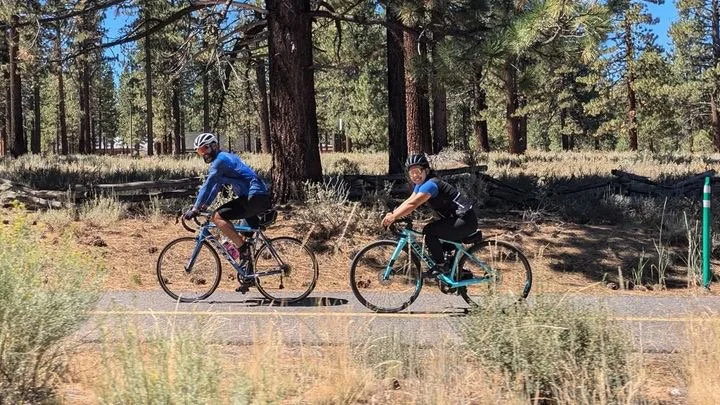
When you're out there on the road, it's not just about raw power; it's about listening to your body and managing the unique demands that 6,000+ feet of elevation throws at you. To help you stay strong, comfortable, and injury-free, here is a breakdown of the physiological changes you will face at altitude, backed by clinical evidence and hard-earned experience on the road.
Tame the Early Climbs & Heart Rate Drift
At Lake Tahoe’s elevation (~6,200 to 7,300 feet), barometric pressure drops. Although the air still contains 21% oxygen, lower ambient pressure means fewer oxygen molecules enter your bloodstream with each breath. To keep your working muscles supplied, your autonomic nervous system responds by elevating your submaximal heart rate and cardiac strain (Richardson 101). Attempting to maintain your sea-level power output or standard heart rate zones at Tahoe leads to rapid metabolic strain, higher relative effort, and early fatigue (Richardson 101).
Physio & My On-the-Road Strategy
The climbs on the Tahoe loop hit very early in the ride, right when your legs are fresh and your heart rate naturally wants to spike. On both of my rides, those initial climbs were a real wake-up call. My heart rate was soaring almost immediately as my system struggled to adjust to the thinner air combined with the rising summer heat.
I quickly learned that trying to force my normal sea-level pace was a losing battle. Here is what saved my legs for the remaining 60+ miles:
Shift into easier gears earlier than you think: I found myself dumping into my easiest gears almost immediately on the first climb just to keep my cadence manageable and prevent my heart rate from redlining. Drop your pride, click down a few gears, and keep it spinning.
Work as a team and draft: I deliberately looked for riders pushing a similar pace and made sure we took turns drafting. Working together made a massive difference in keeping our heart rates stable during those early high-demand efforts.
Give yourself time to settle in: It took significantly longer than I initially anticipated to find my rhythm and stride out there. Be patient. Over the course of the day, my body eventually loosened up and adapted, but only because I didn't blow myself up in the first hour.
Master Hydration in Dry, High-Altitude Air
Low oxygen levels trigger a hypoxic ventilatory response, causing you to breathe faster and deeper even at steady efforts. Because mountain air is exceptionally dry, you lose significant amounts of respiratory water vapor with every exhalation—up to 1,500 mL per day during high-altitude exercise (Marriott; National Academies 250). Combined with summer sweat, rapid fluid loss depletes blood plasma volume quickly. Thicker blood increases cardiovascular strain and dramatically raises the risk of muscle cramps and overheating.
Physio & My On-the-Road Strategy
Knowing that it was going to be a warm day on top of the dry alpine air, I went in with a strict hydration game plan. Because altitude suppresses your natural thirst cues, if you wait until you feel thirsty at Tahoe, you are already behind.
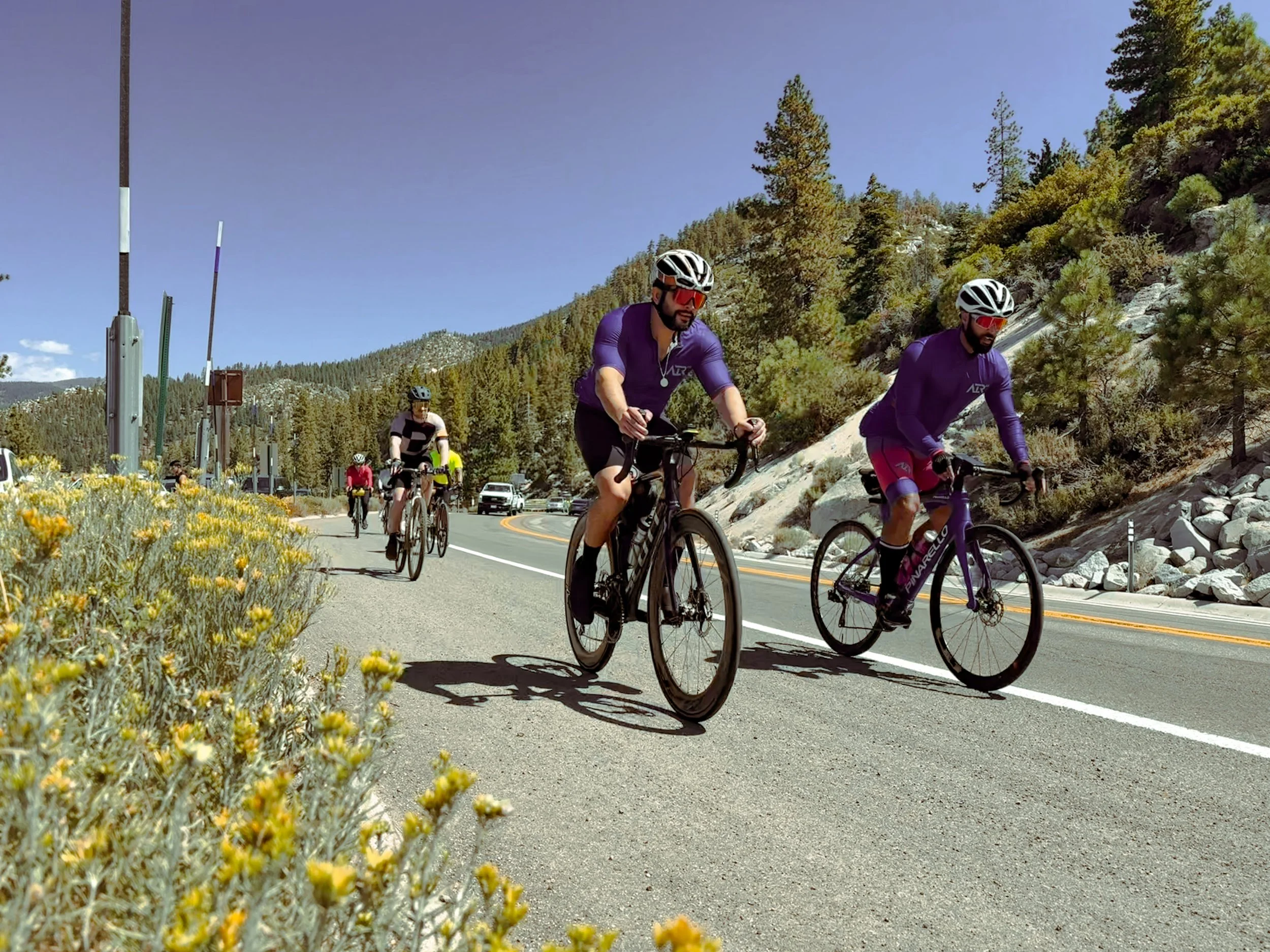
Stick to an hourly bottle rule: I made it a non-negotiable rule to drink roughly 16 ounces of fluid (a full standard water bottle) every single hour to an hour and a half, regardless of where I was on the course. Because of that discipline, I never once felt thirsty or dehydrated.
Prioritize electrolytes every two hours: Water alone isn't enough when you're blowing off moisture and sweating in the sun. Every two hours like clockwork, I made sure I was consuming electrolytes. I personally used LMNT and had great results, but plenty of riders I rode with had equal success using electrolyte mix directly in their bottles all day.
Over-pack on water: Plan on drinking significantly more water than you would on a comparable 70-mile ride at sea level.
Protect Your Posture & Preserve Airflow
As your diaphragm fatigues from heavy respiration, your body relies on accessory respiratory muscles in the neck and chest (such as the scalenes, sternocleidomastoid, and pectoralis minor) to pull air into the lungs (Pilarski et al. 1025). Holding an aggressive, hunched posture on a road bike compresses the abdominal cavity, restricting full diaphragmatic expansion and causing shallow chest breathing. This forces your neck and upper back to overwork, leading to severe neck tension, thoracic stiffness, and postural fatigue.
Physio & My On-the-Road Strategy
Biomechanical efficiency starts before you even line up, and managing physical strain requires active body awareness throughout the day.
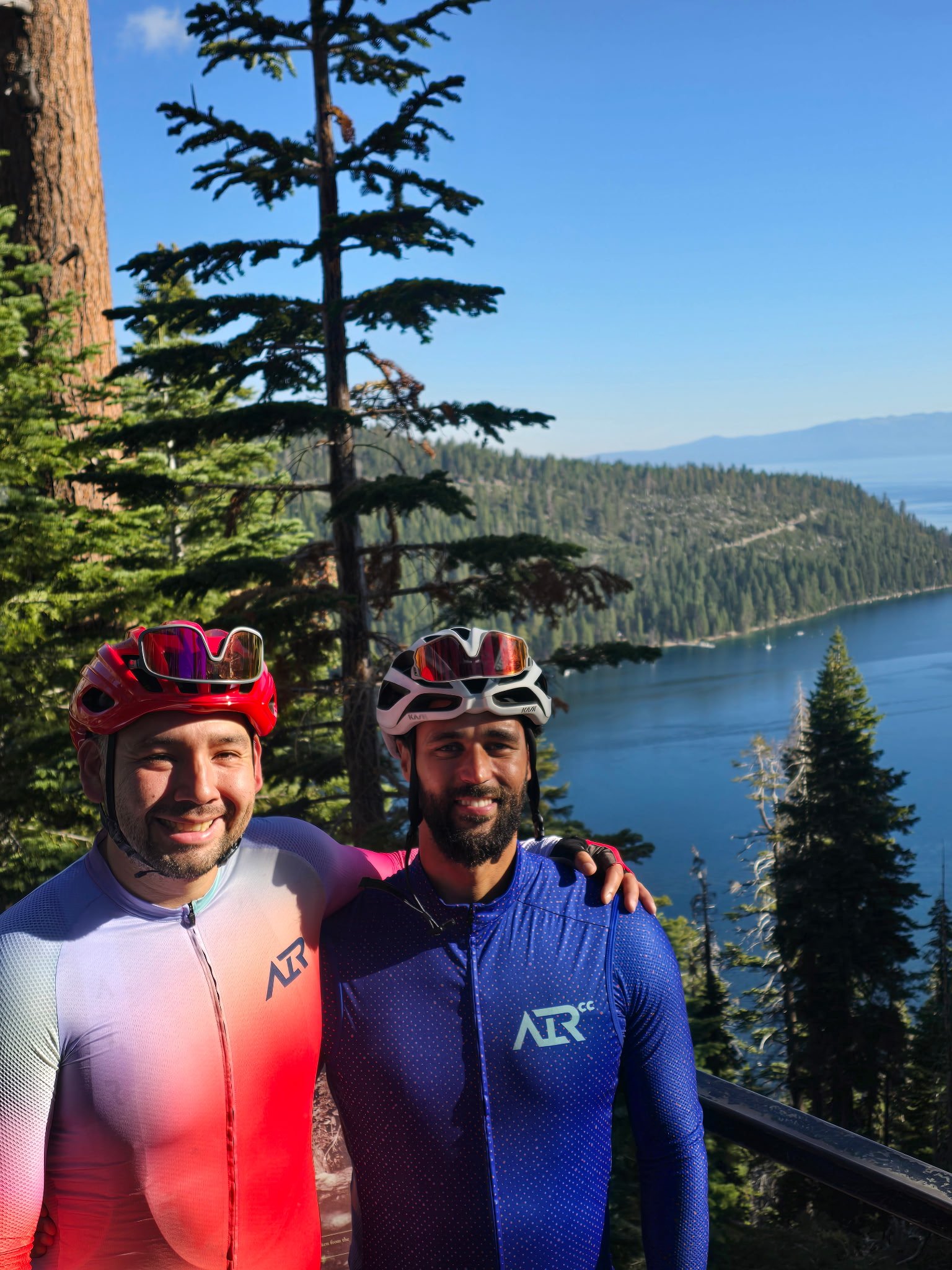
Dial in your gear before race day: Getting a professional bike fit prior to the ride was huge for keeping my posture neutral. Also, don't overlook basic maintenance—making sure my chain was thoroughly cleaned and prepped eliminated unnecessary mechanical drag, saving precious watts on every pedal stroke.
Reset at the rest stops: At the aid stations, I made a point to step away from the crowd for a few minutes to reset my body. I did simple upper-body stretches—seated trunk rotations to unlock my spine and chin-to-clavicle stretches to release the back of my neck and upper traps.
Take mental snapshots: Some of the best physical therapy on a long ride is psychological. Whenever we hit the stunning open views of the lake, I intentionally slowed down, relaxed my shoulders, and soaked it in. Lake Tahoe is an incredible place to ride, and taking a mental (or physical) snapshot not only grounds you, but it takes your mind off the heavy mileage ahead.
Regardless of your experience with riding at altitude, even the most experienced riders will tell you that prior preparation, smart pacing, and body awareness make all the difference between struggling through 72 miles and having the ride of your summer. I hope some of these tips help you to enjoy your next ride with this wonderful group. Have fun out there!
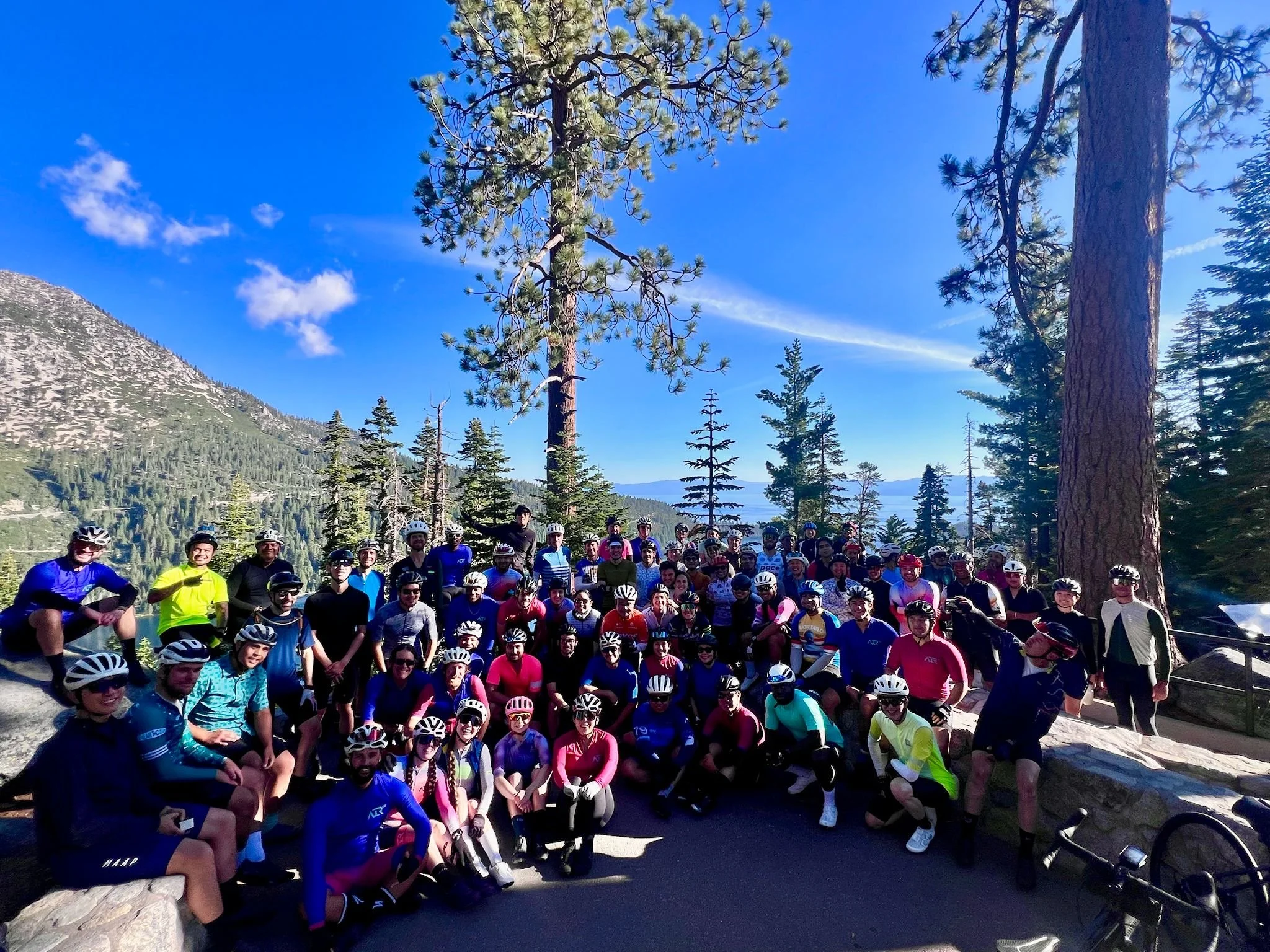
Group shot at the rest stop!
Sources
Marriott, B. M. "Water Requirements During Exercise in the Heat." Nutritional Needs in Hot Environments, National Academies Press.
National Academies of Sciences, Engineering, and Medicine. "Dietary Reference Intakes for Water, Potassium, Sodium, Chloride, and Sulfate." The National Academies Press, 2005, pp. 250–350.
Pilarski, Jason Q., et al. "Muscles of Breathing: Development, Function, and Patterns of Activation." Comprehensive Physiology, vol. 9, 2019, pp. 1025–1080. https://doi.org/10.1002/cphy.c180008
Richardson, Alan J. "Augmented Hypoxic Ventilatory Response and Cardiovascular Strain During High-Altitude Exercise." Journal of Applied Physiology, vol. 73, pp. 101–107.